


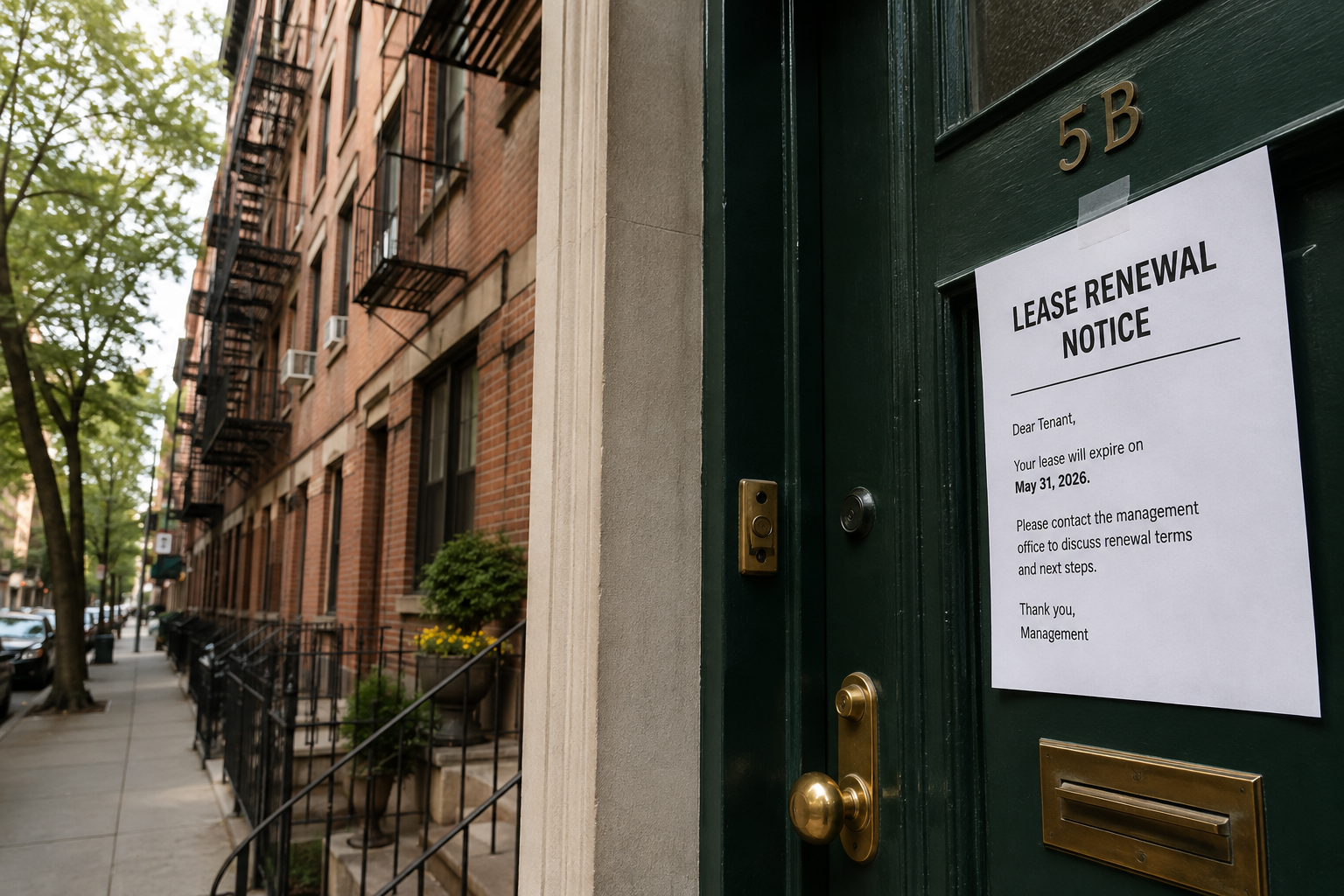
Can a landlord refuse to renew a lease in NYC? Most tenants only start asking after a renewal offer doesn't arrive. The answer comes down to what kind of apartment you live in. Lease Buyout Advisors has spent years on the tenant side of NYC lease disputes, where the type of unit is almost always what settles it. Below, we walk through the main apartment types and what a missed renewal tends to signal.
Key Takeaways About a Landlord’s Non Renewal of Lease
- Whether a landlord can refuse to renew a lease depends on whether your apartment is rent-regulated or market-rate.
- If you’re rent-stabilized, you generally have a right to a renewal lease, and the owner must offer it in writing on the required form within a set window.
- A landlord can decline renewal in a regulated unit only for narrow, legally defined reasons, such as personal use by the owner or their immediate family.
- Discrimination and retaliation are never lawful grounds for refusing renewal.
- When a landlord pushes to end a regulated tenancy, it usually means the unit is worth more to them empty, which is where buyout leverage comes from.
Determining Whether Your Apartment Is Regulated
The first question is what kind of apartment you live in.
A landlord not renewing a lease is far more straightforward in a market-rate unit than a regulated one: with proper written notice and a legal reason, a landlord can not renew a lease for no reason at all. In a rent-regulated apartment, that freedom mostly disappears, rent-stabilized and rent-controlled tenancies carry a right to continue that market-rate ones don't. So if your landlord will not renew your lease and you're rent-stabilized, a non-renewal of a lease is rarely the final word.
If you're unsure which category you fall into, our guide on rent-stabilized vs. rent-controlled housing walks through how to tell, as that's the underlying factor in whether a landlord can refuse to renew a lease.
If You’re Rent-Stabilized, You Have a Right to Renewal
Rent-stabilized tenants have a basic right to a renewal lease. The landlord can’t walk away at the end of the term without honouring these rights.
Under the rules, the owner must offer you a renewal lease in writing, on the official DHCR Renewal Lease Form (RTP-8), between 90 and 150 days before your current lease expires. You then have 60 days to accept it. The renewal has to be on the same terms and conditions as your existing lease, with rent increases limited to the percentages set each year by the Rent Guidelines Board.
As long as you keep paying rent and follow the lease, the tenancy continues, and the owner has to keep offering renewals.
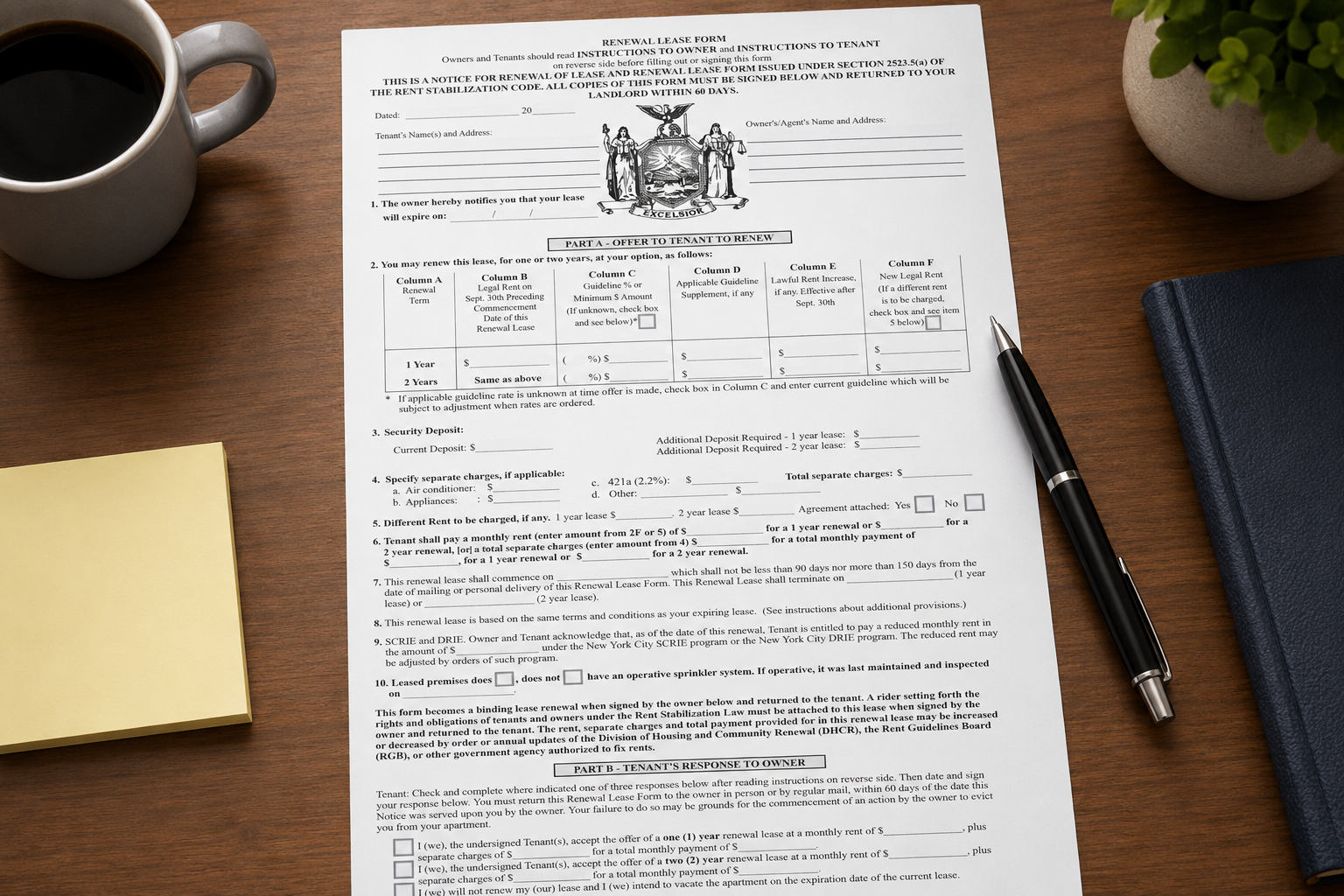
What If Your Landlord Never Sent a Lease Renewal in NYC?
A missing renewal offer usually works in your favor, not the landlord’s. If the owner didn’t send a timely renewal within the 90-to-150-day window, that failure can become a point in your favor if there’s ever a dispute, and can serve as a defense if they later try to evict you. The practical move is to contact the landlord in writing, state that you want to stay, and keep a copy. Silence is not a sign that you have to leave.
Grounds for a Landlord Not Renewing a Lease in a Regulated Unit
Rent regulation isn’t absolute. There are a few defined situations where an owner can decline to renew a regulated lease, but each comes with conditions and paperwork:
- Personal use by the owner or immediate family (owner occupancy): an owner may seek to recover an apartment for themselves or a close family member to use as a primary residence. This is limited, requires proper notice, and can’t be a pretext for clearing the unit to raise the rent.
- Substantial rehabilitation or demolition: if the building is being demolished or needs major work that requires the unit to be vacant, an owner may pursue non-renewal, subject to strict rules and, in many cases, relocation obligations.
- Lease violations by the tenant: non-payment of rent or repeatedly breaching the lease can give an owner grounds to refuse renewal and end the tenancy in housing court.
Outside of narrow situations like these, a rent-stabilized owner generally cannot refuse to renew a lease just because the term ended or they’d prefer a higher-paying tenant.
How Much Notice a Landlord Must Give
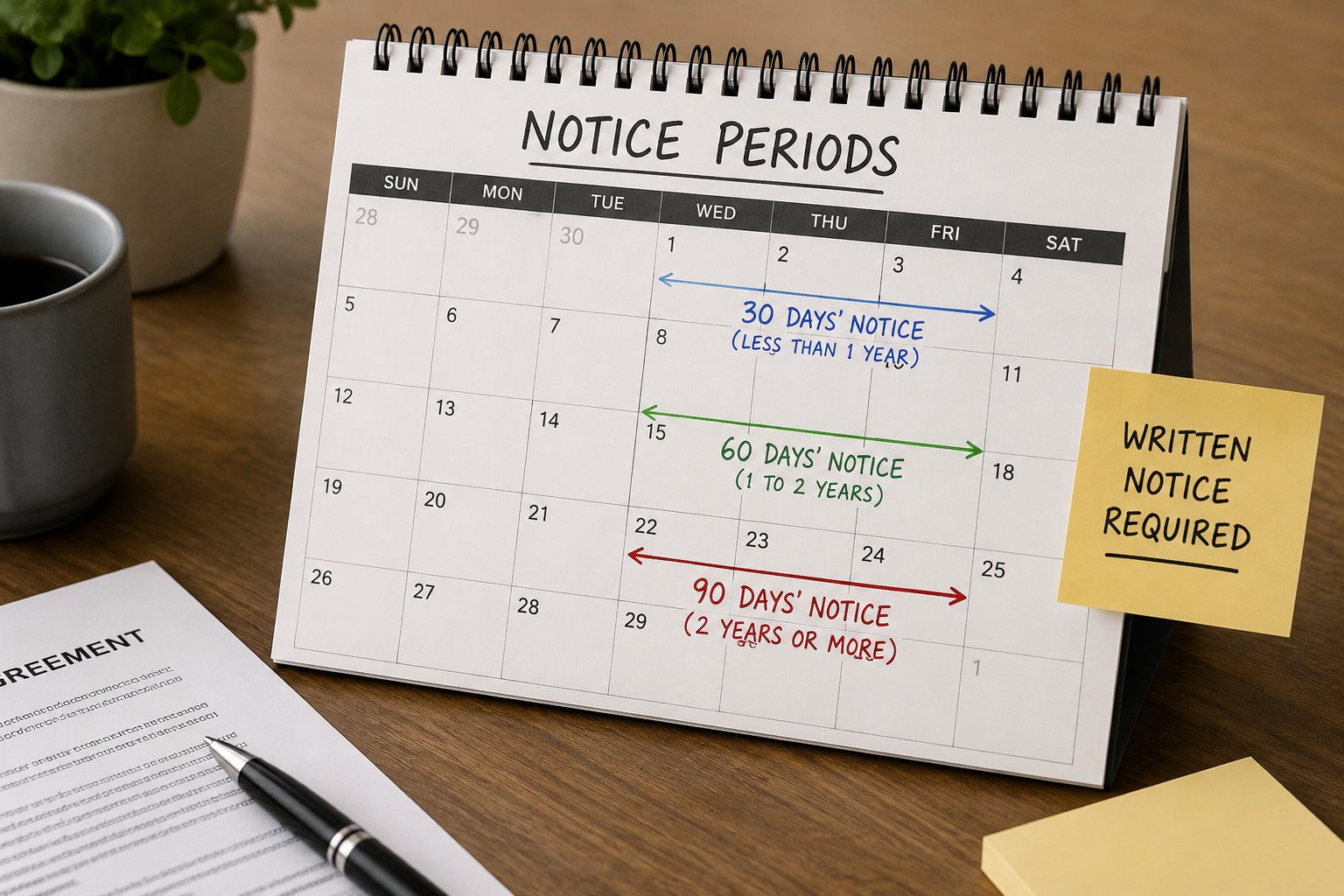
Even where non-renewal is allowed, timing rules apply. Under the Housing Stability and Tenant Protection Act (HSTPA) of 2019, New York’s notice requirements scale with how long you’ve lived in the apartment:
- Less than one year: at least 30 days’ written notice.
- One to two years: at least 60 days’ notice.
- Two years or more: at least 90 days’ notice.
These notices have to be in writing. If a landlord gives late notice or skips it, the tenancy continues in what’s called holdover status until the required notice period runs out, and the owner can’t hand the apartment to a new tenant in the meantime. A defective notice can push the whole timeline back and leave the landlord unable to move forward.
Illegal Reasons for Not Renewing a Lease
Some grounds for refusing renewal are off the table entirely. A landlord cannot decline to renew your lease based on race, national origin, disability, family status, gender, religion, age, or lawful source of income. They also cannot use non-renewal as payback.
If you recently requested repairs or reported a violation and suddenly your lease won’t be renewed, that timing can point to unlawful retaliation. Understanding your broader NYC tenant rights helps you separate a lawful non-renewal from one that crosses a line.
What a Non-Renewal Push Often Means
What most tenants miss, is where the legal question turns into a financial one.
If you’re in a rent-stabilized apartment and a landlord is pressing to end your tenancy, they usually can’t do it through a simple non-renewal. So when the pressure shows up anyway, it’s rarely random. It generally means the unit is worth more to the owner empty than occupied, whether because your rent sits well below market or because they want to renovate or combine units. Sometimes vacancy fits a larger plan for the building.
Lease buyouts take place when there is a gap between what you pay and what the owner could gain. A non-renewal push or an unexpected buyout mention often points to the same underlying motive. If you read it the right way, that motive is your leverage.
What to Do If Your Landlord Will Not Renew a Lease
Stay calm and treat it as information rather than a verdict. Here are a few practical steps:
- Confirm your apartment’s regulation status before you accept anything at face value.
- Ask for the reason in writing, and keep every notice and message.
- Check whether the notice timing complies with the rules.
- Don’t agree to move, and don’t respond to a buyout figure, until you understand what your tenancy is worth.
If a non-renewal or a buyout offer is in play, the number on the table is almost never the real value of your apartment. Lease Buyout Advisors reviews your building, your rent history, and the owner’s likely motive, then negotiates from that position of strength. We challenge low offers and keep pushing until the owner puts their best number forward.
Speak with Lease Buyout Advisors before you respond to a non-renewal of your lease, so you go in backed by leverage.
Disclaimer: This information does not constitute legal advice. Do not act on any information without first consulting professional legal counsel.
FAQs About Landlord Not Renewing a Lease
What Happens if My Landlord Does Not Renew My Lease?
Your lease doesn’t simply end and force you out on the expiry date. If notice was late or missing, the tenancy runs into holdover status until the notice period closes. Even after a valid non-renewal, the only way an owner can remove you is by winning a case in housing court, which takes time and leaves room to respond or negotiate.
Does a Landlord Have to Renew a Lease in NYC?
If you’re rent-stabilized, yes. The owner must offer a renewal on the DHCR Form RTP-8, between 90 and 150 days before your lease ends, under the HSTPA rules. In a market-rate unit there is no such duty, though any non-renewal still has to follow the notice periods and can’t be discriminatory or retaliatory.
Why Would a Landlord Not Renew a Lease?
In a market-rate unit, the reasons are usually ordinary: they want to sell, move in, or re-rent at a higher price. In a regulated unit the calculation is different, because the owner generally can’t refuse renewal at will. When they push anyway, it typically signals the apartment is worth more to them empty.
Is a Non-Renewal the Same as an Eviction?
No. A non-renewal is a landlord declining to offer a new lease; an eviction is a court process to remove a tenant. Even after a valid non-renewal, an owner can’t force you out without going through housing court.
How Do I Know if a Buyout Offer After a Non-Renewal is Fair?
You compare it to what your tenancy is worth to the owner, not to the first number they name. That means weighing your rent against market rent, the owner’s plans for the unit, and comparable buyouts nearby. Lease Buyout Advisors runs that analysis and negotiates the gap on your behalf.


